

We work in an industry that sometimes succumbs to the trap of one-upmanship, crafting creatively superior “competitive” advertising or simply leverage research to shout “perceivably” strong claims like “7X stronger.., 6X Healthier … etc”.
It may sound impactful and persuasive to the industry folks. However, more often than not, it is merely a self-gratifying exercise that does something for us and very little for the consumers.
The reason being, this thinking relies heavily on two fundamental assumptions:
i. Human-beings are rational
ii. Information leads to action
In fact the actual behavior is quite contrary. We see people visit a McDonald’s to have a Big Mac but order it with a Diet Coke or take an Elevator whilst visiting a Gymnasium, or Smoking cigarettes while their New Year’s resolution is to get fitter.
Which leads to the other point that no amount of information is going to change behavior. Information alone does not lead to action.
If it did, there would be a dramatic decline in cigarette smoking or diseases like Aids would probably be curtailed with the use of protection, or waking up for the 6am run when the alarm rings would be normal.
The point here is when it comes to making decisions, we think with our hearts. We are 80% emotional and 20% rational. In fact, Neurologist Donald Calne says, “The essential difference between emotion and reason is that emotion leads to action, while reason leads to conclusions.”
And to support that view, even neuroscience suggests, its the Reptillion Brain makes the decision and the Frontal Lobes rationalises it.
Its the same reason why, no amount of knowledge of phone features/rational arguments will drive either Apple or Samsung users to make the switch. We have already made up our minds about why one is superior over the other, but we will hunt for solid rationalizations to justify our decision.
Another strong case for rethinking how we arrive at propositions is based on a study done by Rosenzweig and Gilovich that shows it is better to buy experiences than to buy objects.
And as Art Markman, Prof. of Psychology & Marketing at the University of Texas puts it, an important reason for this difference is that experiences and things lead to different kinds of regrets.
When you buy a product, for instance a new HD TV, you may experience post purchase dissonance. Soon after buying it, you may regret buying that particular TV, because you could have bought another one (or something else entirely). You could have bought a UHD TV, OLED TV, Smart TV, a Curved TV, etc for a similar price. So, you keep questioning if you got a good deal.
The main issue here is, they may continue to compare it to other alternatives that are available even after the purchase is made.
However when you go on a vacation, that experience is relatively unique. It is hard to compare a particular trip to the Amazon with other trips you might have taken, and so you spend less time comparing your experience to other things you might have done.

Thus, you are much less likely to regret buying an experience.
Another way to avoid buyer’s post purchase regret is to find products that can be treated as experiences. Many products have an experience component to them.
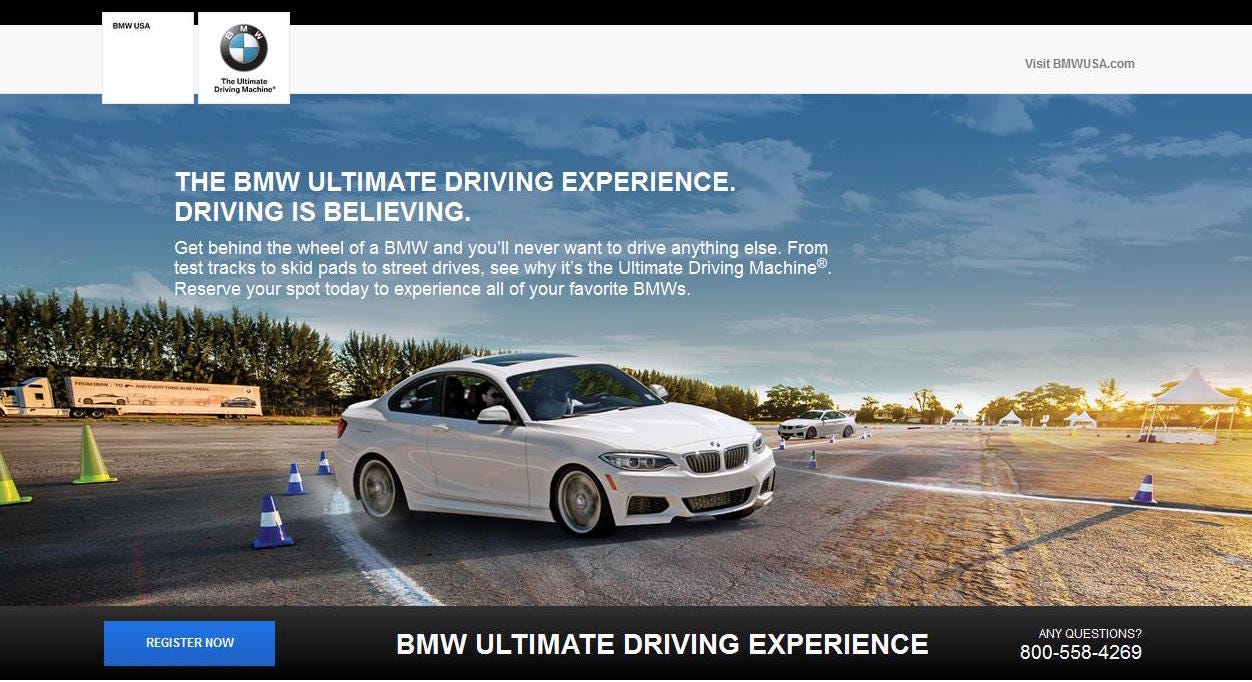
For instance, if you buy a car, you can treat it as a product or you can savor the experience of owning and driving it. A brand like BMW has always focussed and differentiated itself based on the ultimate driving experience.
Dr. Thomas Gilovich, a psychology professor at Cornell University has an interesting view on this. He says, “Our experiences are a bigger part of ourselves than our material goods. You can even think that part of your identity is connected to those things, but nonetheless they remain separate from you. In contrast, your experiences really are part of you. We are the sum total of our experiences.”
In one of the studies he conducted, it showed that even when people had an unhappy experience, once they had a chance to talk about it, their assessment of that experience went up. And he attributes this to the fact that even if something might have been disappointing in the past can become a story to tell at a party or be looked back on as an invaluable character-building experience.
It is the shared experiences that connects us more to other people than shared consumption. We’re more likely to feel connected with someone we took a holiday with or someone who has been on the same trek as us, than someone who also happens to have bought that same Smart Watch.
Needless to mention, experiences can be legitimately shared on social media for external gratification without being judged by peers and friends. Whereby experiences translate into stories and people become storytellers.
Marketers need to rethink and switch focus from “Product differentiators” to “Experience differentiators”.
And brands will truly succeed when they are able to feed consumers with engaging, memorable experiences that can translate into great stories, thereby empowering these storytellers to become ardent brand advocates!
Credits: Dan Ariely, Art Markman, Jay Cassano
Images are sourced from Google and don’t belong to me.