

We work in an industry that sometimes succumbs to the trap of one-upmanship — crafting creatively superior “competitive” advertising or leveraging research to shout “perceivably” strong claims like “7X stronger.., 6X Healthier … etc”.
It may sound impactful and persuasive to industry folks. It may even win a pitch room argument.
However, more often than not, it is merely a self-gratifying exercise that does something for us and very little for consumers.
The reason being, this thinking relies heavily on two fundamental assumptions:
i. Human beings are rational
ii. Information leads to action
Both assumptions feel neat. Linear. Comforting.
Both are deeply flawed.
In reality, behaviour rarely follows the script of rationality.
We see people visit a McDonald’s to have a Big Mac but order it with a Diet Coke. We see people take an elevator whilst visiting a gymnasium. We see smokers pledge on New Year’s Eve to get healthier, only to light up days later.
If information alone changed behaviour, alarm clocks set for 6am runs would rarely be snoozed. Cigarette smoking would have collapsed purely under the weight of warning labels. Diseases like AIDS would have been curtailed simply through informational campaigns promoting protection.
But that is not how human beings work.
When it comes to decision-making, we do not think our way into action — we feel our way into it.
We are 80% emotional and 20% rational. Neurologist Donald Calne puts it succinctly:
“The essential difference between emotion and reason is that emotion leads to action, while reason leads to conclusions.”
Emotion helps us move. Reason helps us justify the move.
Neuroscience suggests that what is often referred to as the “Reptilian Brain” initiates decisions, and the frontal lobes rationalise them after the fact. In other words, the verdict comes first; the closing argument is written later.
It is the same reason why no amount of feature comparison or rational superiority claims will reliably persuade an Apple user to switch to Samsung, or vice versa.
The choice is rarely about megapixels or processing speed alone. It is about identity, belonging, ecosystem comfort, social signalling, habit, and self-narrative.
We have already made up our minds about why one is superior. We then go hunting for rational arguments to defend that emotional commitment.
As behavioural science repeatedly shows us: confirmation bias is far more powerful than competitive comparison charts.
Another strong case for rethinking how we arrive at propositions comes from a study by Thomas Gilovich and Matthew Killingsworth (often cited alongside Rosenzweig & Gilovich’s broader work on consumption) showing that it is better to buy experiences than to buy objects.
Art Markman, Professor of Psychology & Marketing at the University of Texas, explains that experiences and things lead to different kinds of regret.
When you buy a product — say, a new HD TV — you may experience post-purchase dissonance. Soon after buying it, you may regret buying that particular TV because you could have bought another one (or something else entirely). You could have bought a UHD TV, OLED TV, Smart TV, a Curved TV, etc., for a similar price.
The comparison set never disappears.
The marketplace continues whispering: “You could have done better.”
The main issue is that material purchases remain comparable even after the transaction is complete.
However, when you go on a vacation, that experience is relatively unique.

It is difficult to compare a specific trip to the Amazon with other trips you might have taken. The variables are too rich, too personal, too contextual. As a result, you spend less time benchmarking your choice against hypothetical alternatives.
Thus, you are far less likely to regret buying an experience.
Dr. Thomas Gilovich, psychology professor at Cornell University, articulates it powerfully:
“Our experiences are a bigger part of ourselves than our material goods. You can even think that part of your identity is connected to those things, but nonetheless they remain separate from you. In contrast, your experiences really are part of you. We are the sum total of our experiences.”
In one of his studies, even when people reported an unhappy experience, once they had a chance to talk about it, their assessment of that experience improved. A disappointing episode could later become a story told at a party — or reframed as an invaluable character-building moment.
Experiences metabolise into meaning.
Objects rarely do.
Another way to reduce post-purchase regret is to find products that can be treated as experiences.
Many products have experiential layers waiting to be amplified.
For instance, when you buy a car, you can treat it as a product — or you can savour the experience of owning and driving it. A brand like BMW has long differentiated itself around “the ultimate driving experience,” shifting the narrative from metal and machinery to sensation and self-expression.
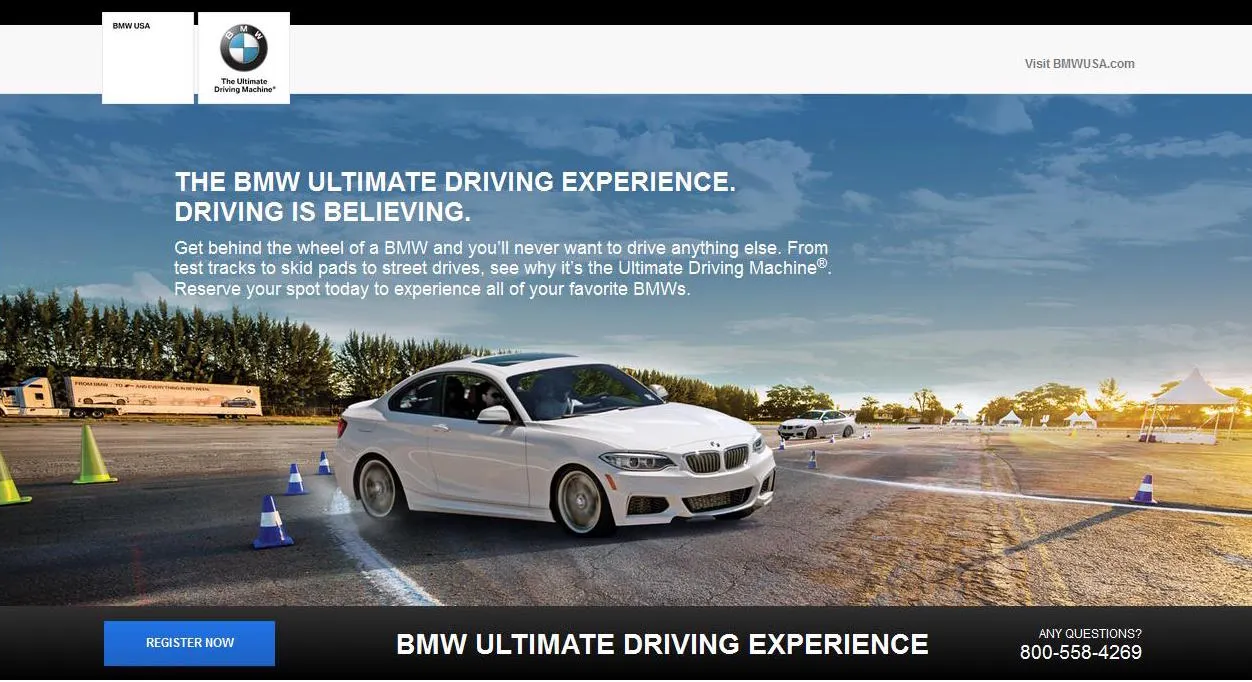
The shift is subtle but profound: from specification to sensation, from horsepower to heartbeat.
It is shared experiences that connect us more deeply to other people than shared consumption.
We are more likely to feel bonded to someone we travelled with, trekked with, or struggled through an adventure with — than someone who simply bought the same smartwatch.
Experiences generate stories.
Stories generate connection.
Connection generates cultural capital.
And in a world mediated by social platforms, experiences can be legitimately shared without the same social judgement that accompanies overt displays of consumption. A holiday album feels different from a receipt.
Experiences translate into stories.
People become storytellers.
Which brings us back to marketing.
Marketers need to rethink and switch focus from “Product differentiators” to “Experience differentiators.”
From “7X stronger” to “7X more meaningful.”
From superiority claims to significance creation.
Brands will truly succeed not when they prove they are better, but when they help consumers feel better — about themselves, their choices, and the stories they get to tell.
When brands feed consumers engaging, memorable experiences, those experiences convert into narratives.
Those narratives convert consumers into storytellers.
And storytellers, far more than satisfied customers, become ardent brand advocates.
The future of persuasion does not lie in louder claims.
It lies in richer experiences.
________________________________________________________________________________________________
Credits: Dan Ariely, Art Markman
Images are sourced from Google and don’t belong to me.